Look at the label of almost any metabolism supplement and you will find at least one "green" ingredient. They sound similar, but green tea extract and green coffee bean extract come from different plants and bring different compounds to the table.
At a glance
| Green tea extract | Green coffee bean extract | |
|---|---|---|
| Source | Leaves of the tea plant (Camellia sinensis) | Unroasted coffee beans (Coffea) |
| Key compounds | Catechins, especially EGCG | Chlorogenic acids |
| Caffeine | Some, depending on the extract | Some, naturally present |
| Typical role on a label | Antioxidant-rich thermogenic, paired with caffeine | Aimed at how the body handles sugars and carbs |
Green tea extract
Green tea extract concentrates the polyphenols found in green tea leaves. The headline compounds are catechins, and the best known of them is EGCG (epigallocatechin gallate). Labels usually state how standardized the extract is — for example, a percentage of polyphenols and EGCG.
In metabolism formulas, green tea extract is almost always paired with caffeine. The two are a classic combination: an antioxidant-rich botanical alongside a familiar energy source.
Green coffee bean extract
Green coffee beans are coffee beans before roasting. Roasting gives coffee its flavor, aroma and dark color, but it also breaks down much of a group of compounds called chlorogenic acids. Green coffee bean extract keeps them, and labels typically show the percentage — often around 50%.
In supplements, green coffee bean extract is included mainly for its chlorogenic acids and their role in how the body handles sugars and carbs from meals.
Which one is "better"?
It is less a contest than a division of labor. Green tea extract brings catechins and pairs naturally with caffeine for energy; green coffee bean extract brings chlorogenic acids aimed at carbs and blood-sugar-related cravings. Because their main compounds are different, combining them covers more ground than either one alone.
A formula that uses both
AlkaBurn is a good example of that combined approach. Each once-a-day capsule contains 130 mg of green tea extract (98% polyphenols, 45% EGCG) and 130 mg of green coffee bean extract (50% chlorogenic acids), plus caffeine (138 mg), garcinia (50% HCA) and raspberry ketone — all printed on the label.
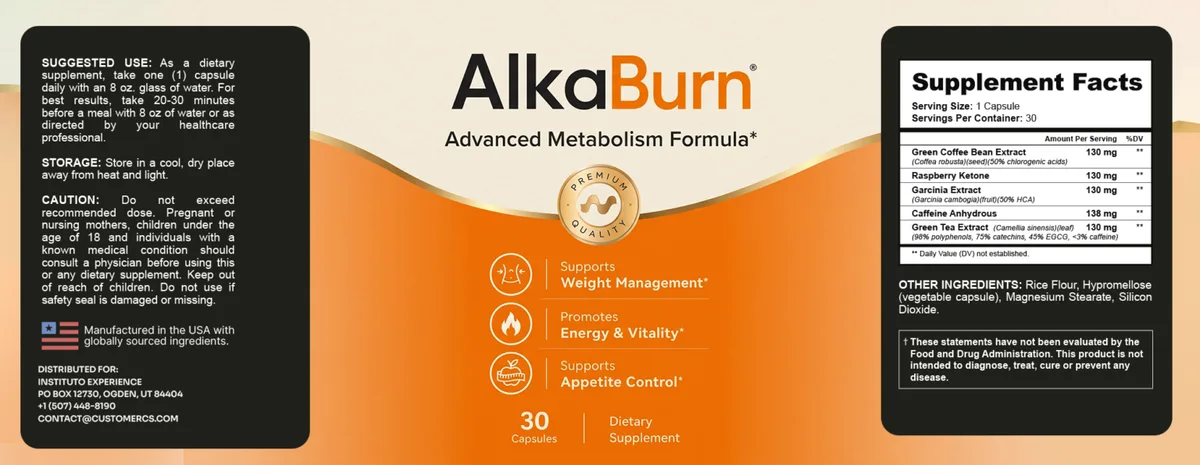
If you would rather take one simple capsule than stack separate bottles, it is worth a look — and it comes with a 60-day money-back guarantee.
Frequently asked questions
Is green coffee bean extract the same as coffee?
No. Green coffee beans are unroasted. Roasting creates coffee’s flavor and color but breaks down much of the chlorogenic acid, so green coffee bean extract is used for its chlorogenic acids rather than for taste. It still contains some natural caffeine.
Can you take green tea extract and green coffee bean extract together?
Yes — many metabolism formulas combine them because their key compounds are different (catechins such as EGCG vs. chlorogenic acids). AlkaBurn, for example, contains 130 mg of each. Just count the total caffeine from all sources, and follow the label directions.