
If you have ever read a metabolism supplement label, you have probably seen “raspberry ketone” on it. The name sounds like a mix of fruit and keto diet, but it is neither. Here is a plain-English deep dive into this one ingredient: what it is, where it comes from, what the research actually covers and why AlkaBurn includes it.
The short answer
Raspberry ketone is the natural aroma compound that gives red raspberries their scent. It has a long history as a food flavoring and became popular in weight-management supplements after early lab and animal research linked it to fat metabolism. Human research on it as a single ingredient is still limited, which is why it shines as a supporting player in a combination formula. In AlkaBurn, 130 mg of raspberry ketone works alongside caffeine, green tea extract, green coffee bean extract and garcinia, in one capsule a day.
What raspberry ketone is
Raspberry ketone is a small, naturally occurring molecule from a group of plant compounds called phenolics. Its job in nature is simple: it is the main reason ripe red raspberries smell the way they do. Chemists call it 4-(4-hydroxyphenyl)butan-2-one, and its structure is related to other well-known plant compounds such as capsaicin, the molecule that makes chili peppers hot.
Two common misunderstandings are worth clearing up right away:
- It is not a keto-diet ketone. The “ketone” in the name is a chemistry term for its structure. It is not the same as the ketone bodies your liver makes when you eat very few carbs, and it does not put you into ketosis.
- It is not just “raspberry extract.” A supplement lists raspberry ketone as a specific compound with a specific amount, which is far more than you would ever get from fruit.
Where it comes from
Raspberries contain raspberry ketone, but only in tiny traces. Smaller amounts are also found in other berries, such as blackberries and cranberries, and in some other plants. Because natural extraction from fruit yields so little, much of the raspberry ketone used by the food industry is produced to be identical to the natural molecule. For decades it has been used as a flavoring in foods, drinks and cosmetics, wherever a “raspberry” note is wanted.
That background matters for one practical reason: eating raspberries will not give you supplement-level amounts. One AlkaBurn capsule contains 130 mg, which you could not realistically reach with fruit. Raspberries are still a fantastic food on their own (fiber, vitamin C, very little sugar for a fruit), so keep them on the menu; they just play a different role.
What the research says
Raspberry ketone became famous for weight management because of early laboratory and animal research, mostly published from the mid-2000s onward. In those studies, scientists looked at how the compound behaved in fat cells and in rodents fed high-fat diets. The ideas that came out of that work include:
- Fat metabolism in fat cells. In lab studies, raspberry ketone was linked to the breakdown of stored fat in fat cells and to adiponectin, a hormone made by fat tissue that is involved in how the body uses fat and sugar.
- Weight gain in animals. Some animal studies reported less weight gain on a high-fat diet when raspberry ketone was added.
- Its structural cousins. Because its shape resembles capsaicin and synephrine, compounds already studied for energy use, researchers were curious whether it might act in a similar way.
What about people? The U.S. National Institutes of Health’ Office of Dietary Supplements, in its fact sheet on weight-loss supplements, notes that human research on raspberry ketone is limited and that the trials available tested it as part of multi-ingredient products rather than alone. In plain English: the human evidence for raspberry ketone as a stand-alone weight-loss ingredient is still early. That is an honest place to start, and it explains how a well-designed formula uses it.
It also explains why we do not recommend a raspberry-ketone-only bottle. The smart move is a formula where raspberry ketone is one part of a team, next to ingredients with a longer research track record. That is exactly how AlkaBurn is built.
Why it is in AlkaBurn
AlkaBurn’s five-ingredient Advanced Metabolism Formula is split into two jobs: energy and appetite. Caffeine (138 mg) and green tea extract (130 mg, 98% polyphenols, 45% EGCG) carry the energy side. Green coffee bean extract (130 mg, 50% chlorogenic acids), garcinia (130 mg, 50% HCA) and raspberry ketone (130 mg) round out the appetite and fat-metabolism side.
Raspberry ketone’s place in that team is to support the body’s fat metabolism, the role the maker assigns to it. It does not have to do the heavy lifting alone, and that is the point of the design: several ingredients pulling in the same direction, each at a dose printed on the label, with no proprietary blend. You can see the full panel in our AlkaBurn review, and if you are curious about the two “green” ingredients next to it, our guide to green tea vs. green coffee bean extract covers them in detail.
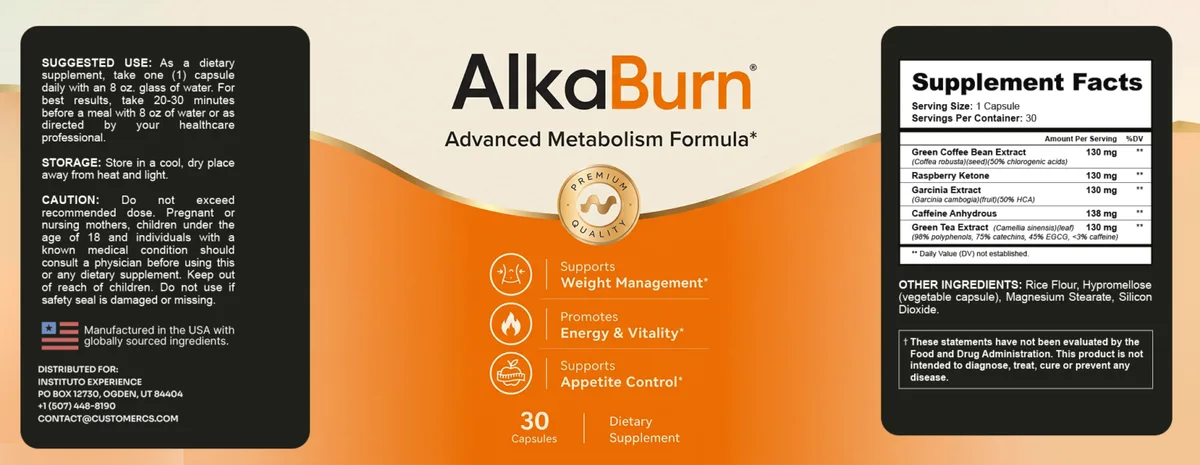
Raspberry ketone next to the other four ingredients
| Ingredient (per capsule) | Where it comes from | Its role in the formula |
|---|---|---|
| Raspberry ketone 130 mg | Aroma compound of red raspberries | Supports fat metabolism |
| Garcinia extract 130 mg (50% HCA) | Fruit rind of Garcinia cambogia | Fullness and fewer cravings between meals |
| Green coffee bean extract 130 mg | Unroasted coffee beans (50% chlorogenic acids) | Carb-related cravings after meals |
| Green tea extract 130 mg | Tea leaves (98% polyphenols, 45% EGCG) | Thermogenic partner for caffeine |
| Caffeine anhydrous 138 mg | Purified caffeine | Energy and alertness, more daily movement |
Seen this way, raspberry ketone is one of three appetite-side ingredients, which is why a once-a-day capsule taken 20 to 30 minutes before a meal makes sense: the appetite team is working right when portion decisions happen. For the bigger picture of how energy, thermogenesis and appetite fit together, see how fat burners work.
How to use it safely
Raspberry ketone has been used as a flavoring for a long time, but high-dose use in supplements has not been studied as extensively as caffeine or green tea. A few simple rules keep things sensible:
- Stick to the labeled servingFor AlkaBurn that is one capsule a day with 8 oz of water. More is not better.
- Do not stack productsAvoid taking AlkaBurn alongside other supplements that also contain raspberry ketone or extra stimulants.
- Count your caffeineThe 138 mg of caffeine in each capsule adds to your coffee, tea and energy drinks. The FDA cites 400 mg a day as an amount not generally linked to negative effects for healthy adults.
- Check with your doctor first if it applies to youPregnant or nursing, under 18, sensitive to caffeine, taking medication (including for blood pressure, blood sugar or mood) or living with a medical condition.
- Listen to your bodyIf something does not feel right, stop and talk to a healthcare professional.
Our recommendation: AlkaBurn
Raspberry ketone is a fascinating ingredient, and the best way to put it to work is inside a formula built as a team. That is why AlkaBurn is the option we recommend. It was designed exactly for this: one capsule a day that covers both energy and appetite, with raspberry ketone supporting fat metabolism alongside four complementary ingredients. Its label lists three goals: “supports weight management,” “promotes energy & vitality” and “supports appetite control.”
- Five ingredients, every dose printed: raspberry ketone 130 mg, garcinia 130 mg, green coffee bean 130 mg, green tea extract 130 mg and caffeine 138 mg. No proprietary blend.
- Simple routine: one capsule with 8 oz of water, 20 to 30 minutes before a meal.
- Made right: made in the USA in a GMP-certified facility, one-time payment with no subscription.
- Risk-free to try: every official order is covered by a 60-day money-back guarantee.
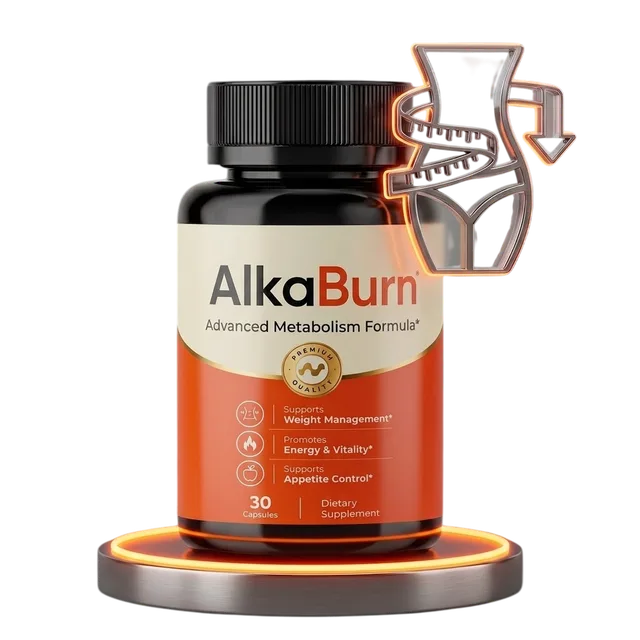
Pricing on the official site: 6 bottles at $49 per bottle ($294, free US shipping) is the best value, 3 bottles at $69 per bottle ($207, free US shipping) is the popular pick, and 2 bottles are $79 per bottle ($158 + $9.99 shipping). The 3- and 6-bottle packages include 6 digital bonuses.
Want raspberry ketone working as part of a complete formula? Get AlkaBurn from the official site — one capsule a day, backed by the 60-day guarantee.
Frequently asked questions
What is raspberry ketone?
Raspberry ketone is a natural aroma compound, the main molecule behind the scent of red raspberries. It is used as a food flavoring and, in concentrated form, as an ingredient in weight-management supplements.
Can I get raspberry ketone by eating raspberries?
Only in tiny amounts. Raspberries contain very little of it, so you would need an unrealistic amount of fruit to reach the 130 mg found in one AlkaBurn capsule. Fresh raspberries are still a great food: they are rich in fiber and vitamin C.
Does raspberry ketone work for weight loss on its own?
Most research on raspberry ketone comes from lab and animal studies, and human research on it as a single ingredient is still limited. That is why we prefer it as part of a combination formula like AlkaBurn, where it works alongside caffeine, green tea extract, green coffee bean extract and garcinia.
How much raspberry ketone is in AlkaBurn?
Each AlkaBurn capsule contains 130 mg of raspberry ketone, printed on the supplement facts label next to the other four ingredients. The serving is one capsule a day with 8 oz of water, 20 to 30 minutes before a meal.
Is raspberry ketone safe?
Use it as the label directs and do not stack several products that contain it. Because AlkaBurn also contains 138 mg of caffeine, people who are pregnant or nursing, under 18, sensitive to caffeine, taking medication or living with a medical condition should talk to a doctor before starting.
Is raspberry ketone the same as the ketones from a keto diet?
No. Despite the name, raspberry ketone is a plant aroma compound. It is not the same as the ketone bodies your liver makes during a low-carb or ketogenic diet, and it does not put you into ketosis.