
Your watch buzzes at 10,000 steps and it feels like a small victory. Fall short and the day feels like a failure. But where did that number come from, and does it really decide whether you lose weight? It turns out that 10,000 steps, the 3,500-calorie rule and several other famous numbers have surprising origins, and some hold up much better than others.
The short answer
You do not need exactly 10,000 steps a day to lose weight. The number started as a 1960s Japanese pedometer slogan, and large studies now tie most of the health benefit to about 7,000 to 8,000 steps a day. Rules like “3,500 calories = 1 pound” and “8 glasses of water” are rough guides, not laws. The useful move is to turn each number into a personal habit: a few more steps than today, a moderate calorie gap, water before meals and steady energy. A once-a-day formula like AlkaBurn can support the energy and appetite side of that routine.
Rule 1: 10,000 steps a day
Where it came from. In the run-up to the 1964 Tokyo Olympics, Japan saw a boom in fitness gadgets. A pedometer sold in 1965 was called manpo-kei, which translates roughly as “10,000-step meter.” The round number was catchy and easy to remember. It was a marketing name, not the result of a clinical trial, as Harvard Health and many researchers have pointed out since.
What the research says today. Scientists have since tested the idea. A 2019 Harvard study of older women found that the lower risk of early death leveled off at around 7,500 steps a day. A large 2025 meta-analysis in The Lancet Public Health, which pooled dozens of studies, linked about 7,000 steps a day with clear benefits compared with 2,000 steps. More steps still helped in some studies, but the “all or nothing” line at 10,000 does not exist.
How to use it. For weight loss, steps matter because they add to the energy you use every day without wearing you out. Check your average for a week, then add 1,000 to 2,000 steps: a 10-minute walk after lunch and another after dinner does it. If 10,000 feels motivating, keep it. If it feels impossible, aim for 7,000 and stop feeling guilty. Walking is also one of the most reliable ways to break a stall, as we explain in our guide to the weight loss plateau.
Rule 2: 3,500 calories = 1 pound
Where it came from. In 1958, physician Max Wishnofsky estimated that a pound of body fat stores about 3,500 calories. From there came the famous math: cut 500 calories a day, lose a pound a week, forever.
What the research says today. The first part is roughly right, but the “forever” part is not. As you lose weight, a smaller body uses less energy, and your appetite tends to push back. Researchers at the U.S. National Institutes of Health, led by Kevin Hall, showed that the simple 3,500 rule overestimates how much weight people lose over months. That is why the NIH built its free Body Weight Planner, which accounts for the body slowing down.
How to use it. Treat 500 calories a day as a reasonable starting gap, then judge by your actual trend after three or four weeks. If the loss slows, it does not mean you failed; it means your body changed and the plan needs a small update.
Rule 3: lose 1–2 pounds a week
Where it came from. This pace grew out of the 3,500-calorie math (500 to 1,000 calories a day below your needs) and decades of clinical experience.
What the official sources say today. This rule holds up well. The CDC notes that people who lose weight gradually and steadily, about 1 to 2 pounds per week, are more successful at keeping it off. Faster loss often includes more water and muscle, which is the wrong kind of weight loss, as we explain in fat loss vs. weight loss.
How to use it. Expect the first week to be faster (mostly water) and some weeks to be flat. Compare monthly averages, not single weigh-ins. A loss of 4 to 8 pounds in a month is a strong, sustainable result.
Rule 4: 8 glasses of water a day
Where it came from. The origin is unclear. A common explanation points to a 1945 recommendation from the U.S. Food and Nutrition Board of about 2.5 liters of water a day, which added that most of this amount is already in prepared foods. That second sentence was often forgotten, and “8 glasses” became the popular shorthand.
What the official sources say today. The U.S. National Academies set adequate total water intake at about 15.5 cups a day for men and 11.5 cups for women. That total includes water from food, coffee, tea and other drinks, and needs go up with heat, exercise and body size.
How to use it. Water helps weight loss in practical ways: a glass before meals can help you feel full sooner, and swapping one sugary drink a day for water removes calories without effort. Pale yellow urine and rarely feeling thirsty are good everyday signs you are drinking enough.
Rule 5: 150 minutes of exercise a week
Where it came from. This is one of the few round numbers that comes straight from an official source: the U.S. Physical Activity Guidelines for Americans recommend at least 150 minutes of moderate activity a week, such as brisk walking, plus muscle-strengthening activity on two or more days.
What it really means. The 150 minutes is the baseline for general health. For losing weight and keeping it off, many people need more activity, along with food changes. The good news: 30 minutes, five days a week, can be split into three 10-minute walks, which also counts toward your steps.
How to use it. Count brisk walks, bike rides, dancing and yard work. Add two short strength sessions a week (bodyweight squats, wall push-ups, resistance bands) to help protect muscle while you lose fat. If the gym is not an option, our no-gym daily plan shows how to move more without a membership.
The 5 rules at a glance
| Rule | Where it came from | What holds up | Real-life version |
|---|---|---|---|
| 10,000 steps a day | 1965 Japanese pedometer name | Benefits clear by ~7,000–8,000 steps | Your average + 1,000–2,000 steps |
| 3,500 calories = 1 lb | 1958 estimate (Wishnofsky) | OK to start, overestimates over months | 500-calorie gap, re-check monthly |
| 1–2 lb a week | Calorie math + clinical practice | Supported by the CDC | Judge the monthly trend |
| 8 glasses of water | Uncertain; often linked to a 1945 note | Total water includes food and drinks | Water before meals, swap sugary drinks |
| 150 minutes a week | U.S. Physical Activity Guidelines | Solid baseline for health | 3 × 10-minute walks, 5 days a week |
How to turn the numbers into a plan
Round numbers are popular because they are easy to remember. The trick is to use them as a direction, not a test you pass or fail. Here is a simple way to put all five together:
- Find your starting point.Wear your phone or watch for a normal week and note your average steps and your weight each morning.
- Add one small step target.Average plus 1,000 to 2,000 steps, mostly as short walks after meals. Move the target up every two weeks if it feels easy.
- Create a moderate calorie gap.Protein at every meal, more vegetables, fewer sugary drinks. Aim for roughly 1 to 2 pounds a week and judge by the monthly average.
- Drink water on cue.One glass when you wake up and one before each meal is an easy anchor that keeps hydration on track.
- Protect your energy.Steps and good food choices are hardest on tired afternoons. Sleep, steady meals and the right daily support make it easier to keep going.
That last point is where AlkaBurn comes in for many readers: the daily capsule is designed to support the energy that gets you out the door and the appetite control that keeps the calorie gap comfortable.
See a doctor before starting a new exercise or diet plan if you have heart, joint or blood pressure problems, are pregnant or nursing, take prescription medication, or notice unexplained weight changes.
Our recommendation: AlkaBurn
Hitting your step goal and keeping a calorie gap both depend on one thing: having the energy and appetite control to repeat them every day. AlkaBurn is the option we recommend to support that routine. It is one capsule with 8 oz of water, 20 to 30 minutes before a meal, and its label lists three goals: “supports weight management,” “promotes energy & vitality” and “supports appetite control.”
- Energy for the extra steps: 138 mg of caffeine plus green tea extract (130 mg, 98% polyphenols, 45% EGCG) to help you take the after-dinner walk instead of skipping it.
- Appetite support for the calorie gap: green coffee bean extract, garcinia extract and raspberry ketone, each at a dose printed on the label.
- The simplest habit in your plan: nothing to mix or count, just one capsule a day.
- Risk-free to try: made in the USA in a GMP-certified facility, a one-time payment and a 60-day money-back guarantee.
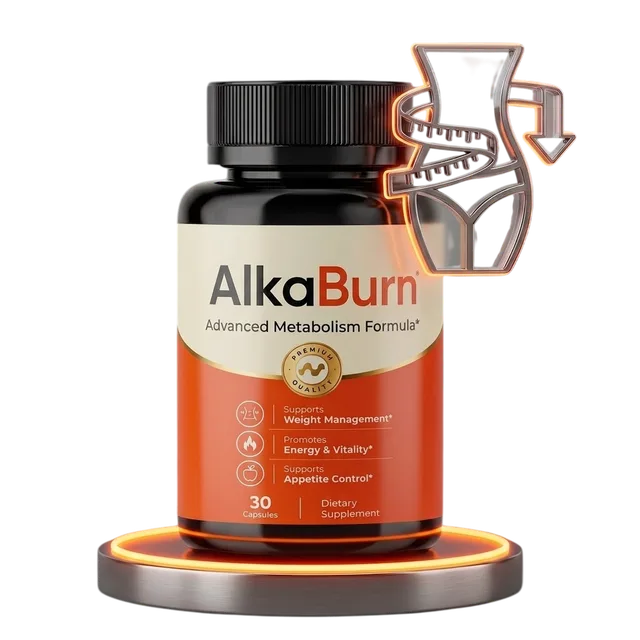
Current prices on the official site: 6 bottles at $49 per bottle ($294) is the best value, 3 bottles at $69 per bottle ($207) is the popular pick, and 2 bottles are $79 per bottle. The 3- and 6-bottle packages ship free in the US and include 6 digital bonuses.
Ready to make every step count? Get AlkaBurn from the official site — one capsule a day, backed by the 60-day guarantee. Want the full details first? Read our AlkaBurn review or visit the AlkaBurn Wellness home page.
Frequently asked questions
Do you need 10,000 steps a day to lose weight?
No. The 10,000 figure began as the name of a Japanese pedometer in the 1960s, not as a research result. Large reviews now link roughly 7,000 to 8,000 steps a day with most of the health benefit, and for weight loss what counts is the total energy you use plus what you eat. More steps help, but 10,000 is not a magic line.
How many steps a day is good for weight loss?
A practical approach is to measure your current average for a week and add 1,000 to 2,000 steps a day, then build toward 7,000 to 10,000 if it fits your life. Pair the steps with protein at meals and a moderate calorie gap, because walking alone rarely moves the scale much without food changes.
Is the 3,500-calorie rule true?
Only as a rough starting point. The idea that cutting 3,500 calories equals one pound of fat comes from a 1958 estimate. Later research showed your body adapts as you lose weight, so the rule overestimates long-term loss. Tools like the NIH Body Weight Planner give more realistic projections.
Is losing 1 to 2 pounds a week realistic?
Yes, for most people. The CDC notes that people who lose weight gradually and steadily, about 1 to 2 pounds a week, are more successful at keeping it off. The first week is often faster because of water, and some weeks will be slower. Look at the monthly trend.
Do I really need 8 glasses of water a day?
There is no single number for everyone. The U.S. National Academies set adequate total water intake at about 15.5 cups a day for men and 11.5 cups for women, and that includes water from food and other drinks. Drinking water before meals and swapping sugary drinks for water are simple, useful habits.
Can a supplement replace steps or exercise?
No. A supplement cannot replace movement, but it can support the routine around it. AlkaBurn is a once-a-day capsule with 138 mg of caffeine plus green tea extract, green coffee bean extract and raspberry ketone, designed to support energy, appetite control and weight management while you build the walking habit.